- The SEOs Diners Club
- Posts
- 🔥 SEOs Diners Club #204: The New Era of E-Commerce: How Google's "Agents" Are Rewriting the Rules of Shopping
🔥 SEOs Diners Club #204: The New Era of E-Commerce: How Google's "Agents" Are Rewriting the Rules of Shopping
This week, we dive deep into Google's Universal Commerce Protocol (UCP) and the "Agentic Commerce" revolution, its impact on SEO, and how autonomous AI tools like Claude Cowork are transforming our workflows. Get ready for the future of digital marketing!

Mert Erkal
January 19, 2026
Hello, and welcome to a new issue of SEOs Diners Club!
This week's agenda is so packed that I didn't know where to start. But there's one topic that overshadows everything else: Agentic Commerce. That is, a brand new e-commerce universe where AI "agents" shop, negotiate, and complete transactions on our behalf. Google's Universal Commerce Protocol (UCP) announcement isn't just an innovation—it's the first step in a revolution that will fundamentally shake our SEO and digital marketing strategies. If you're ready, let's open the doors to this new world.
🚀 Headline: The "Agents" Revolution in E-Commerce: Google UCP Changes the Rules of Shopping
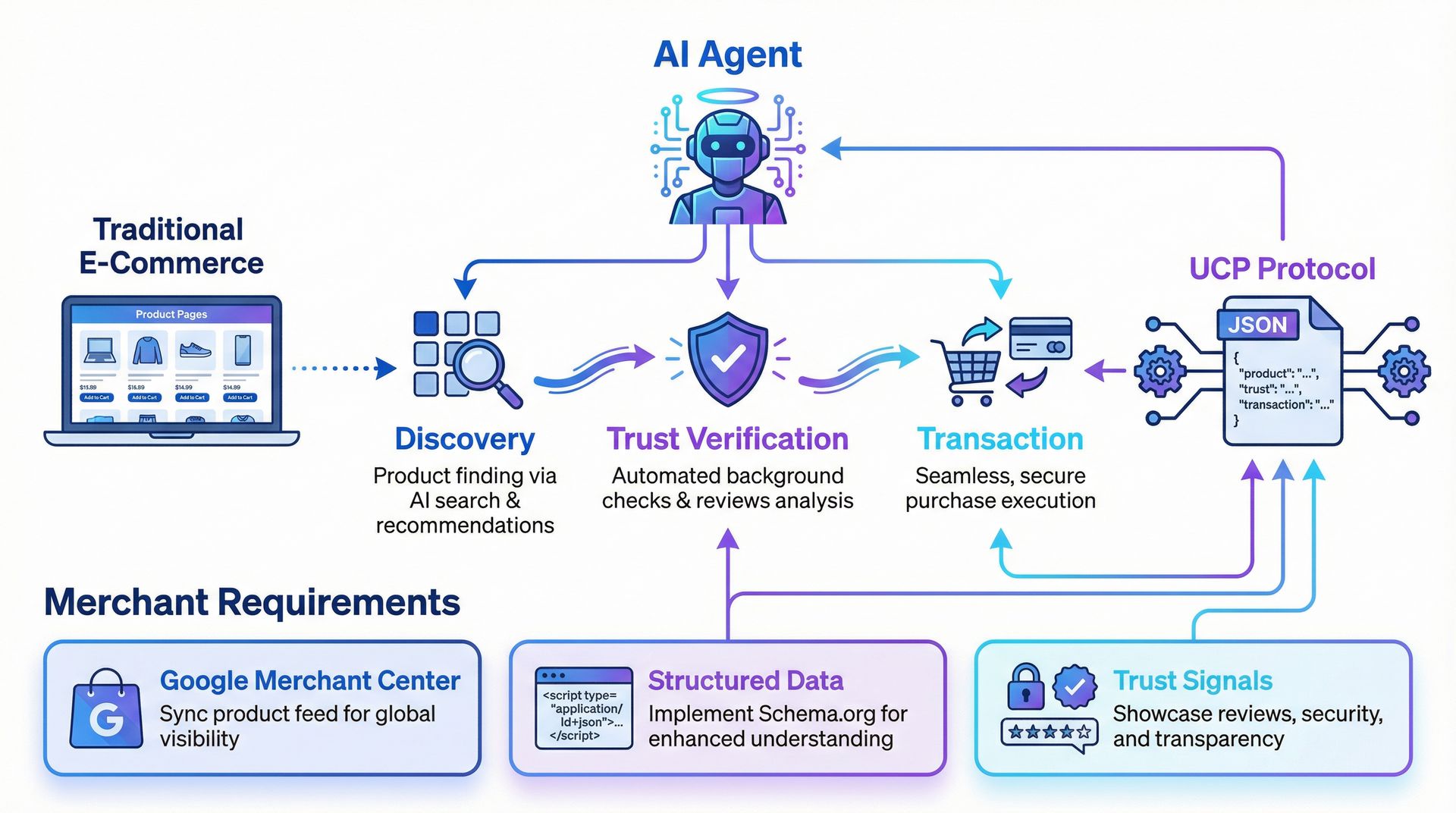
Until last week, what did we have in mind when we talked about SEO? Page rankings, keywords, backlinks, technical optimization... These are still important, but now they're just part of the picture. With UCP, Google is building an infrastructure where AI agents (think of your personal assistant Gemini) can shop directly from search results, even negotiating on your behalf. This means users can purchase your products without ever visiting your website. Yes, you heard that right.
As highlighted in Aleyda Solis's excellent article and Marie Haynes's detailed YouTube video, "trust" and "capability" are at the heart of this new order. The goal of SEO is no longer just to drive traffic, but to convince an AI agent that "working with us is safe and efficient."
So what does this mean in practice? Here are 7 fundamental changes coming to e-commerce SEO:
Google Merchant Center (GMC) Becomes Even More Critical: Simply uploading a product feed won't be enough. Details like your return policies, customer service information, and product alerts must be clearly defined through GMC. Most importantly, "conversational commerce attributes" are coming. When AI asks, "What lenses are compatible with this camera?" the answer will come from your feed.
Merchant Trust Becomes Mandatory: Trust, which we used to influence indirectly through E-E-A-T, is now a "hard requirement." AI agents will avoid transacting with merchants who don't have a stable identity, consistent data, and predictable operations (shipping, returns, etc.).
Structured Data Becomes the Foundation: Structured data like Product, Offer, and AggregateRating on your site will be the primary food source for AI agents. A discrepancy between the price on your site and the price in GMC can cause the AI to instantly cancel the transaction.
Focus Shifts from "Page Ranking" to "Transaction Enablement": Classic SEO's question "How do I rank this page?" is being replaced by "Can an AI agent safely shop from this merchant?" If the AI gets stuck at any stage of the process (discovery, trust, payment), you're out of the game no matter how good your ranking is.
Discoverability Becomes "Capability-Based": Merchants will need to publish a JSON manifest file at /.well-known/ucp that lists their capabilities. This file is the new way to tell AI agents "I can do these things" (e.g., "same-day shipping," "personalized products"). If your manifest is missing, you become invisible.
Traffic Is No Longer the Only Success Metric: AI-mediated commerce can happen without generating any traffic to your site. This means Google Analytics' standard metrics will fall short. We'll need to rely on server-side attribution models and backend order data to measure success.
SEO Becomes More Cross-Functional: SEO professionals will now need to work closely not just with the marketing team, but with engineering, product, operations, and even legal departments. Because every detail from return policies to API integration is now an SEO issue.
Time to Take Action: This change may seem daunting, but it's also a tremendous opportunity. Brands that properly structure their processes, keep their data clean and consistent, and learn to speak the language of AI agents will get miles ahead of their competitors. At Stradiji, we've already started shaping our strategies for this new era. If you want to prepare your business for the future, let's have a coffee.
📊 Algorithm & Search Engine Updates
The search world was also busy this week:
Phantom "Noindex" Errors in Google: Are you seeing a noindex error in Search Console but there's no such tag on your page? You're not alone. Google's John Mueller stated that this situation is usually caused by server-side caching or CDN issues, where an old noindex header can be shown specifically to Googlebot. This article on Search Engine Journal offers practical methods like HTTP header checking and Google Rich Results Test to diagnose the problem. Definitely check it out.
January 15-16 Ranking Volatility: If you felt some movement in search results, your instincts were right. According to SERoundtable's report, many SEO tools detected significant volatility on January 15-16. While there's no confirmed update yet, these fluctuations in results are a clear sign that Google is testing something.
Critical Security Vulnerability in All in One SEO Plugin: A vulnerability was found in the All in One SEO (AIOSEO) plugin, used by over 3 million WordPress sites, that allows low-privileged users to capture the site's AI access key. This means malicious actors could consume your AI credits. If you're using this plugin, update to version 4.9.3 or newer immediately.
🤖 From the AI World
On the AI front, we're meeting the flagship of the transition from the "chat" era to the "action" era:
Claude Cowork: Your Digital Partner Has Arrived:
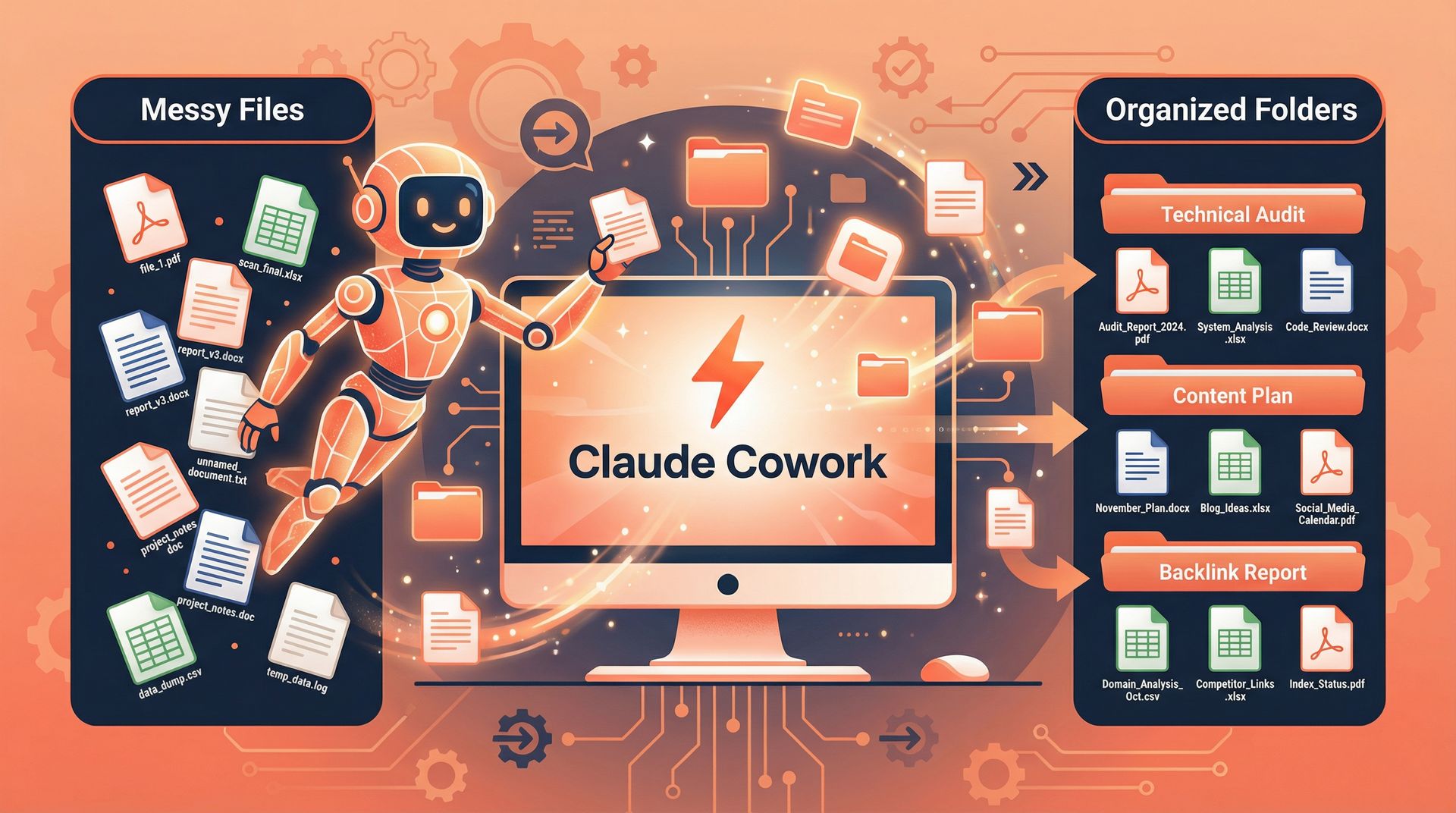
Anthropic announced Claude Cowork, which buries the "chatbot" concept in history. Cowork is no longer an assistant that tells you what to do; it's a "digital partner" that accesses your computer's file system, controls your browser, and autonomously completes complex workflows for you. This is the beginning of the "Agentic AI" era. For example, you can give it hundreds of scattered report files and say, "Sort these by topic, rename them, and prepare a summary presentation."
Great News: Cowork was initially only available to Max subscribers ($100-200/month), but as of January 16, it's now open to Pro subscribers. So now you can try this powerful tool for just $20/month. While Anthropic notes that Pro users may hit their usage limits sooner (because Cowork consumes more tokens), accessing such capability at this price point is an incredible opportunity. This update also brought improvements like session renaming, better file format previews, and confirmation messages before deleting files.
I'll be covering all the details about this revolutionary tool and how it can be used in SEO processes in a video I'll be releasing on my YouTube channel on Tuesday, January 20. Don't miss it! Also, if you're curious about what you can do with Claude's Chrome extension, check out my related video.
Ads Are Coming to ChatGPT:
OpenAI announced that it will begin testing ads within ChatGPT for free and low-tier (Go) users in the US. Ads will be contextually relevant to conversations and will appear below responses, clearly labeled. OpenAI emphasizes that ads will never affect response quality and that user data privacy will be prioritized. This is an important step in AI platforms' search for sustainable revenue models.
💡 Practical SEO Tips
This week's tip is related to the "phantom noindex" error mentioned above. If you encounter such a problem in Search Console, before panicking, use Google's Rich Results Test tool as a first step. Paste the URL you want to test and analyze how Google sees the page. The tool will show you the HTTP headers Googlebot encountered and the rendered HTML. If you see a noindex tag here, the problem is most likely caused by a caching rule at the server or CDN layer. This simple test can save you from a search that could take hours.
Closing
The digital world is transforming at a dizzying pace. Yesterday's truths, today's standards, and tomorrow's opportunities are constantly being reshaped. We're here to help you not lose your bearings in this rapid flow, stay one step ahead with the right strategies, and take your business into the future. Whether you're preparing to "talk to agents" in e-commerce or adapting your content strategy to next-generation SEO, we at Stradiji are ready to guide you.
Don't forget to subscribe to my YouTube channel to not miss my in-depth analyses on these and similar topics. See you in the next notes!
Best regards,
Mert Erkal
About Mert Erkal
Mert Erkal is an expert with 15+ years of experience in digital marketing and SEO. As the founder of Stradiji, he provides consulting services to corporate companies on SEO strategies, conversion rate optimization, and AI integration.
More Information:
Company: https://www.stradiji.com
Digital Marketing Notes: https://www.merterkal.com/
Twitter: https://twitter.com/merterkal
LinkedIn: https://www.linkedin.com/in/merterkal
YouTube: https://www.youtube.com/@stradiji
I love sharing the latest developments and strategies in the SEO world with you. If you find my content helpful, you can support me by buying a coffee. ☕ Click 'Buy Me a Coffee' to contribute to knowledge sharing. Let's achieve more together!